|
|
KeyWay |
On Friday, October 23, the Rotary Club of Atlanta West End is pleased to welcome Mark J. Newman , an accomplished immigration attorney and community leader, as our program speaker. With more than 40 years of experience in law, leadership, and public service, Newman has dedicated much of his career to immigration law, advocacy, and expanding access to legal resources. We look forward to hearing his insights on immigration, community engagement, and the importance of service.
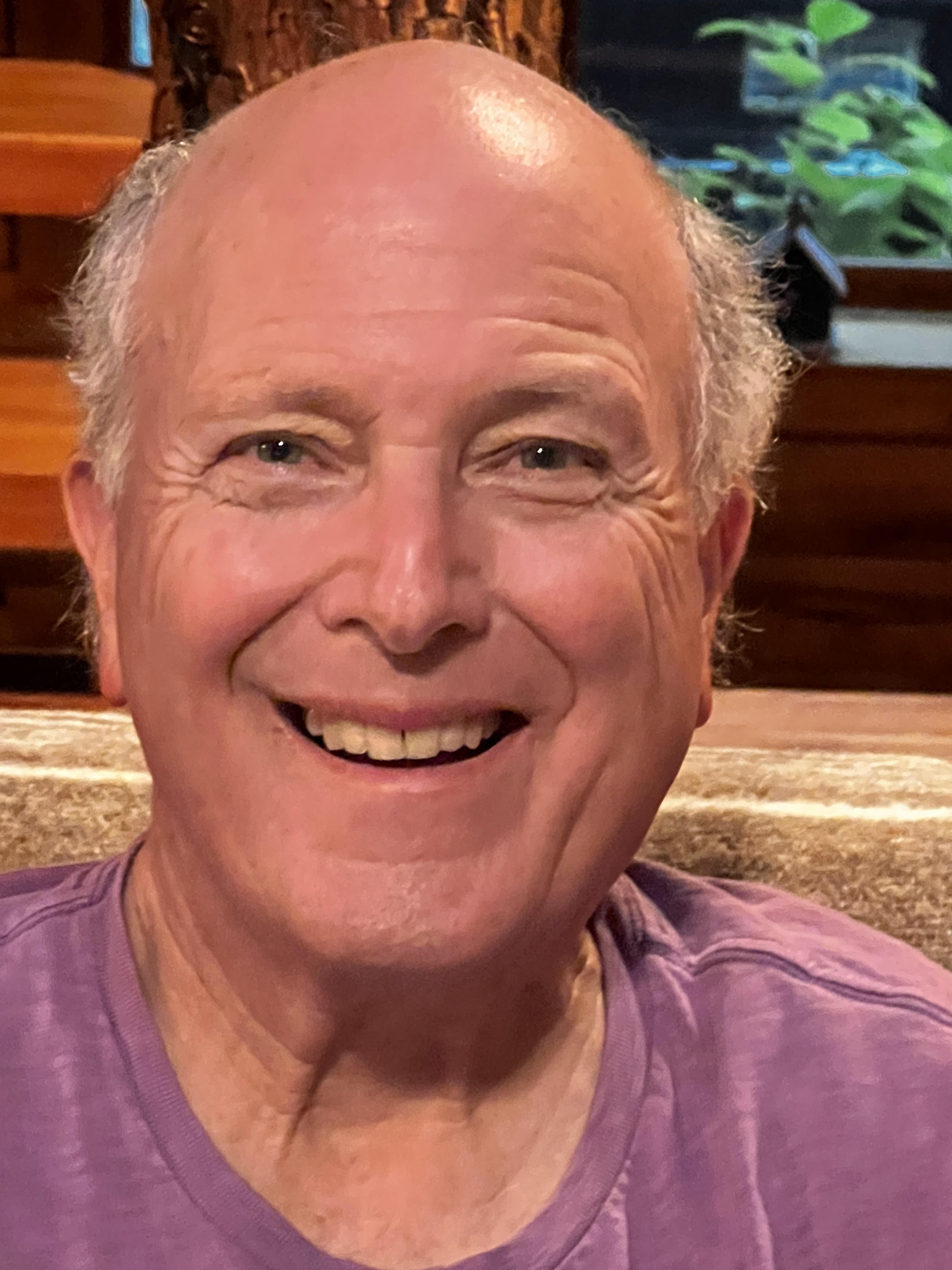
Mark Newman is an accomplished immigration attorney with more than 40 years of experience in law, leadership, and community service. Before retiring from full-time legal practice, he served as a partner and head of the Immigration Department at Troutman Sanders, where he advised corporations, executives, entrepreneurs, and investors on complex immigration matters. Throughout his career, he earned numerous professional distinctions, including recognition by Chambers USA and Best Lawyers, and was named the 2013 Georgia Chapter Attorney of the Year and 2015 Mentor of the Year by the American Immigration Lawyers Association.
Beyond his legal career, Newman has demonstrated a longstanding commitment to public service and advocacy. He chaired Troutman Sanders' Atlanta Pro Bono Committee, helping lead initiatives that contributed to the firm's receipt of the American Bar Association Business Law Section's 2013 National Public Service Award. He is a founding board member of the Georgia Asylum and Immigration Network (GAIN), co-founder of the Georgia Latino Law Foundation, and former board chair of the Latin American Association. His community involvement also includes leadership roles with Rotary International, nonprofit healthcare organizations, and educational initiatives.
Newman currently maintains a limited private law practice and continues his community engagement through several nonprofit and advocacy organizations. He is a graduate of Princeton University and earned his Juris Doctor from the University of Miami School of Law.
JOIN ONLINE: Click Here| Meeting ID: 874 0116 4307 | Passcode: Service | One tap mobile: +13052241968
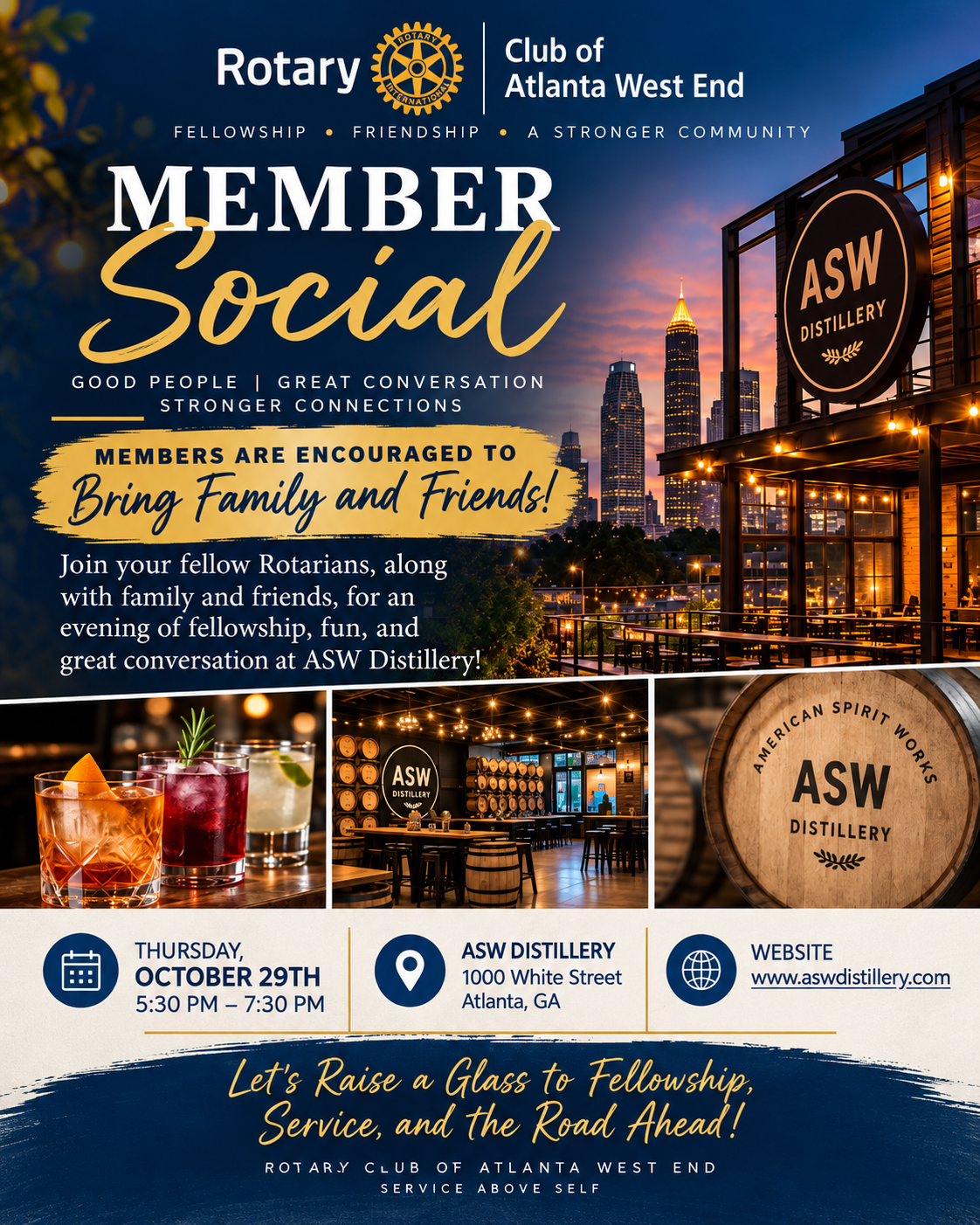
President Chris Hempfling welcomed all to the meeting and asked Neil Shorthouse AWER Secretary and AWER program chair of October to introduce our speaker, his near fifty-year friend, Mr. Reginald Beaty, President of The Foundation for Educational Success.
Reginald Beaty opened his presentation by asking two foundational questions: what is the status of Black boys in America today, and what do Black boys believe America thinks of them? He grounded his remarks in federal data from the National Assessment of Educational Progress (NAEP) and his own personal experience growing up in Bankhead Courts, then one of Atlanta's most challenging neighborhoods.
Reggie emphasized that Black boys are not the problem. Rather, a series of compounding gaps: opportunity gaps, resource gaps, economic gaps, exposure gaps, peer gaps, and father-figure gaps make it hard to succeed.
He highlighted that NAEP data that not surprisingly confirm the academic achievement gap between Black boys and their white and Asian counterparts persists. Further, Black boys continue to be disciplined at disproportionately high rates, leading to lost instructional time. If a child cannot read by the third grade, Beaty noted, the downstream consequences — disengagement, involvement in the juvenile justice system, and economic marginalization — become trends that are difficult to reverse.
He also raised the issue of financial literacy, sharing that in barbershop conversations with over twenty Black men, only one reported investing in the stock market. He connected this directly to the absence of financial education in many Black households, arguing that economic empowerment cannot occur without economic knowledge.
Mr. Beaty drew on federal research, and his own life experience to frame a candid discussion about the systemic gaps, perceptions, and opportunities affecting Black boys and Black men in the United States.
Rotary Club members were challenged to reflect on their own roles and responsibilities in supporting Black boys and their communities.
Beaty emphasized it’s not a matter of reclaiming equality, arguing that equity and full inclusion have never been fully realized for Black boys and men. He shared this as a genuine perspective from the barbershop and from his own experience.
He also shared findings from his barbershop conversations about how Black men perceive their place in America's social value hierarchy. The men he spoke with described a ranking in which white males sit at the top, followed by white females, Asian males and females, Indian males and females, Latino men and women, Black women, and finally Black men — with Native Americans described as largely invisible to the system.
This perceived hierarchy, Beaty explained, drives political disengagement. When Black men do not see themselves reflected in systems of power or feel that their votes produce no meaningful change in their daily lives, they disengage from civic participation. He was careful to note that this is a perception — not a statement of absolute fact — but stressed that perceptions shape behavior and self-worth.
He also introduced a critical insight about emotional language: when a Black boy says "you disrespected me," he is actually saying "you hurt me." Because vulnerability is culturally coded as weakness in many Black communities, Black boys and men do not use the language of pain or trauma. This suppression of emotional expression, Reggie argued, leads to outward aggression and cycles of violence that are then criminalized rather than understood.
In response to violence as a frequent way of proving manhood, Craig Summers, an AWER visitor, commented that when a boy's only available model of strength is physical dominance — fighting, toughness, street credibility — that becomes his norm. Violence as a response to disrespect becomes normalized because no alternative framework for manhood has been modeled or made accessible. Reggie Beaty affirmed this, connecting it in part to the absence of father figures and the cultural suppression of emotional vulnerability.
Reggie closed his presentation with his own story of growing up in Bankhead Courts, being expelled from Atlanta Public Schools in the ninth grade for fighting, spending two years in the streets, and incarceration three times as a juvenile. He was not lacking in cognitive ability — his challenges were non-cognitive, rooted in the unaddressed trauma and instability he carried into every classroom.
His turning point came through Communities in Schools, the organization Neil Shorthouse introduced him to, which saw potential in him that he could not yet see in himself. At sixteen, he put down his weapons. He earned a GED, attended Stillman College on a scholarship, entered the military through ROTC, and retired as a lieutenant colonel after twenty years of service. General Colin Powell had identified him for a general officer track, and was reportedly disappointed when Beaty chose to return to work with Communities in Schools instead.
Beaty noted that three of his four closest childhood friends did not share his outcome — one is serving a life sentence, one has died, and one is struggling with addiction. He attributed his different trajectory entirely to the intervention of people who chose to invest in him. He now works nationally with school principals on leadership development and school turnaround, and his siblings, children, and grandchildren have all gone on to own homes and pursue higher education.
He ended by challenging every person in the room — regardless of race — to move beyond passive membership and take an active role in the lives of Black boys and the broader community — not through charity, but through opportunity creation, mentorship, and genuine relationship-building. He emphasized that opportunities create hope, and without hope, no amount of expectation-setting will produce change.
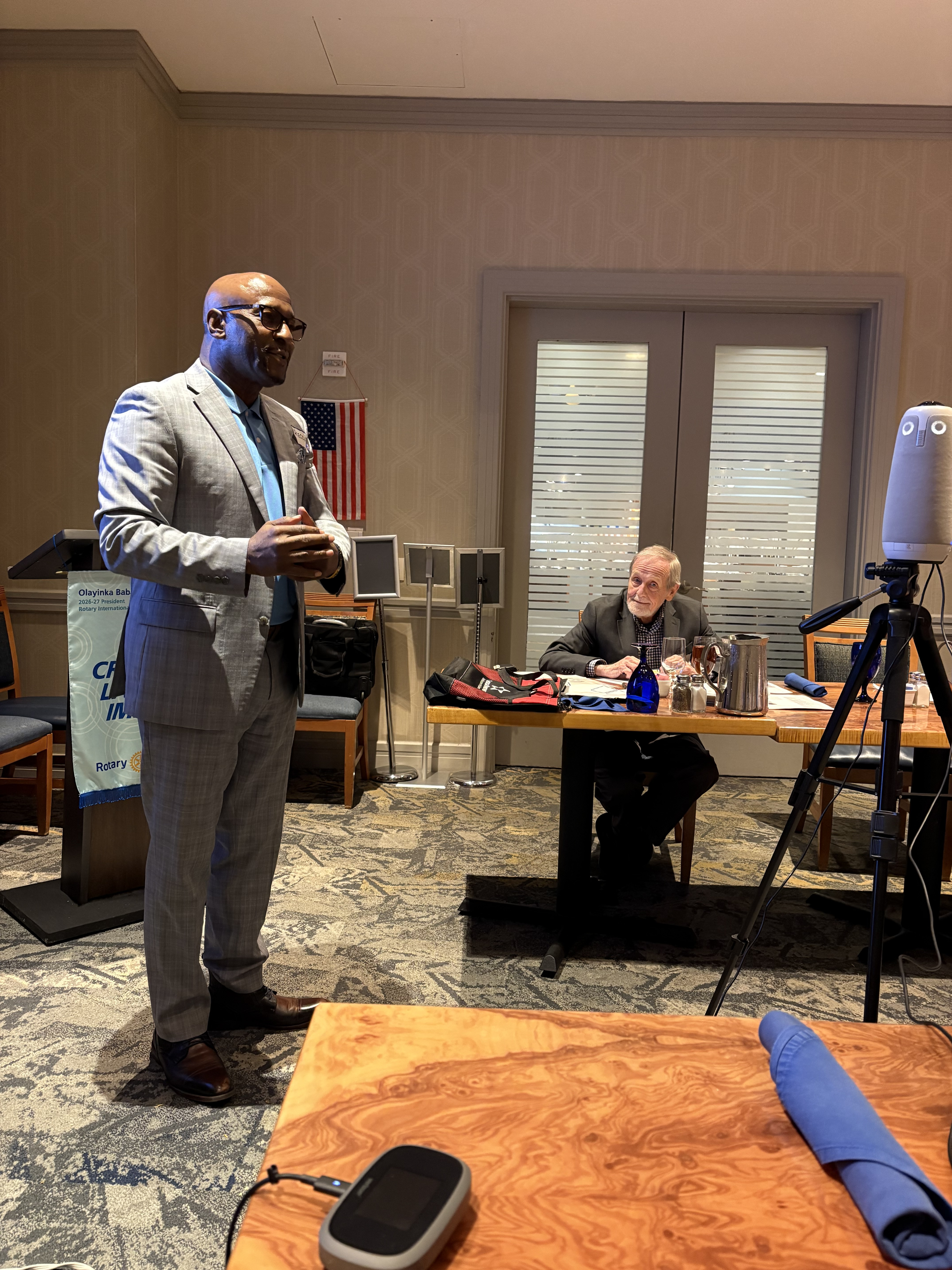
The Rotary Club of Atlanta West End invites members, family, and friends to an evening of fellowship, fun, and great conversation at ASW Distillery on Thursday, October 29, from 5:30–7:30 p.m.
The Member Social will be held at ASW Distillery, located at 1000 White Street in Atlanta. Members are encouraged to bring family and friends for a relaxed evening of connecting with fellow Rotarians and strengthening friendships.
Come raise a glass to fellowship, service, and the road ahead!
Meeting Agenda
Sign up to be a program chair in the new Rotary Year here today!
A Little Dues, A Lot of Good
Supporting District 6900 starts with staying current on your district dues. Keeping your dues up to date ensures we can continue providing leadership development, youth programs, district events, club support, and the many resources that help our clubs thrive.